
Orquestra Coreográfica do Selvagem
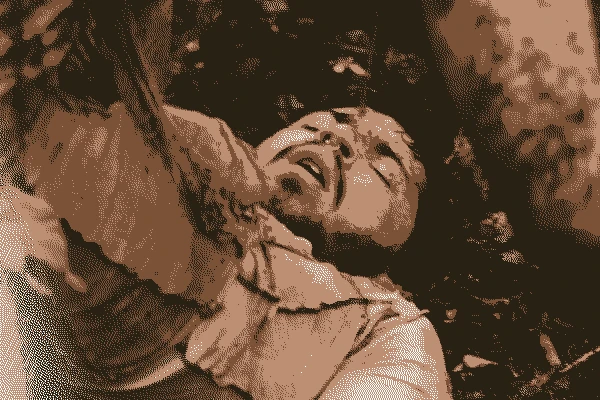
The Orquestra Coreográfica do Selvagem was an interesting exercise in community creation, mediated by professional dancers. Like almost all of Ordem do Ó's creations, it was designed, rehearsed and premiered in the Monsanto forest. Green spaces matter enormously to Pedro Ramos, artistic director, dancer and choreographer of Ordem do Ó.
As with other soundscapes I've made for this company, I made heavy use of rehearsal recordings. Spoken voice, exhaled breath, grunts and shouts were the raw material, and I had the pleasure of recording most of these sounds myself. That let me develop the music in direct dialogue with the movements and choreographic phrases as they emerged. The end result, I think, married the choreography perfectly.
Bringing the community in gave the show a much larger "choir" than other Ordem do Ó creations, and as a result the sounds I recorded were far richer.
It was also a chance to adapt my work to a wider range of artistic sensibilities, since the show had a different kind of dancer and was aimed at different audiences.
Below are a few of the tracks that best capture what this soundscape was.
Anália
Once again, I ended up including at least one track with a clear, marked rhythm and more conventional, less textural musical content — something I do in every piece. Here I got to explore recordings taken during rehearsal with the dancers, in particular a rhythm shared by the dancer whose name I gave the track.
Fauno
Somewhat like other pieces I've composed for, I also tend to include one openly tonal track, with a more conventional harmonic and melodic structure, even if less rhythmic. Here I did my best to channel a "Debussy-esque" or even "Ravel-esque" style, to evoke the forest's dreamlike atmosphere and the character taking the solo at that moment, the Faun. It was also a chance to dust off a Japanese flute I had at home and had never used professionally.
Louva-Deus
As in other compositions for Ordem do Ó, using the human voice in a treated, distorted way is something I enjoy and try to keep as a base tool of musical creation. Here, with access to a larger group of participants, the vocal-exercise recordings let me build the textures present in this track — textures that, done alone at home or through electronic instruments, would never have had this much richness in their imperfection and unpredictability.